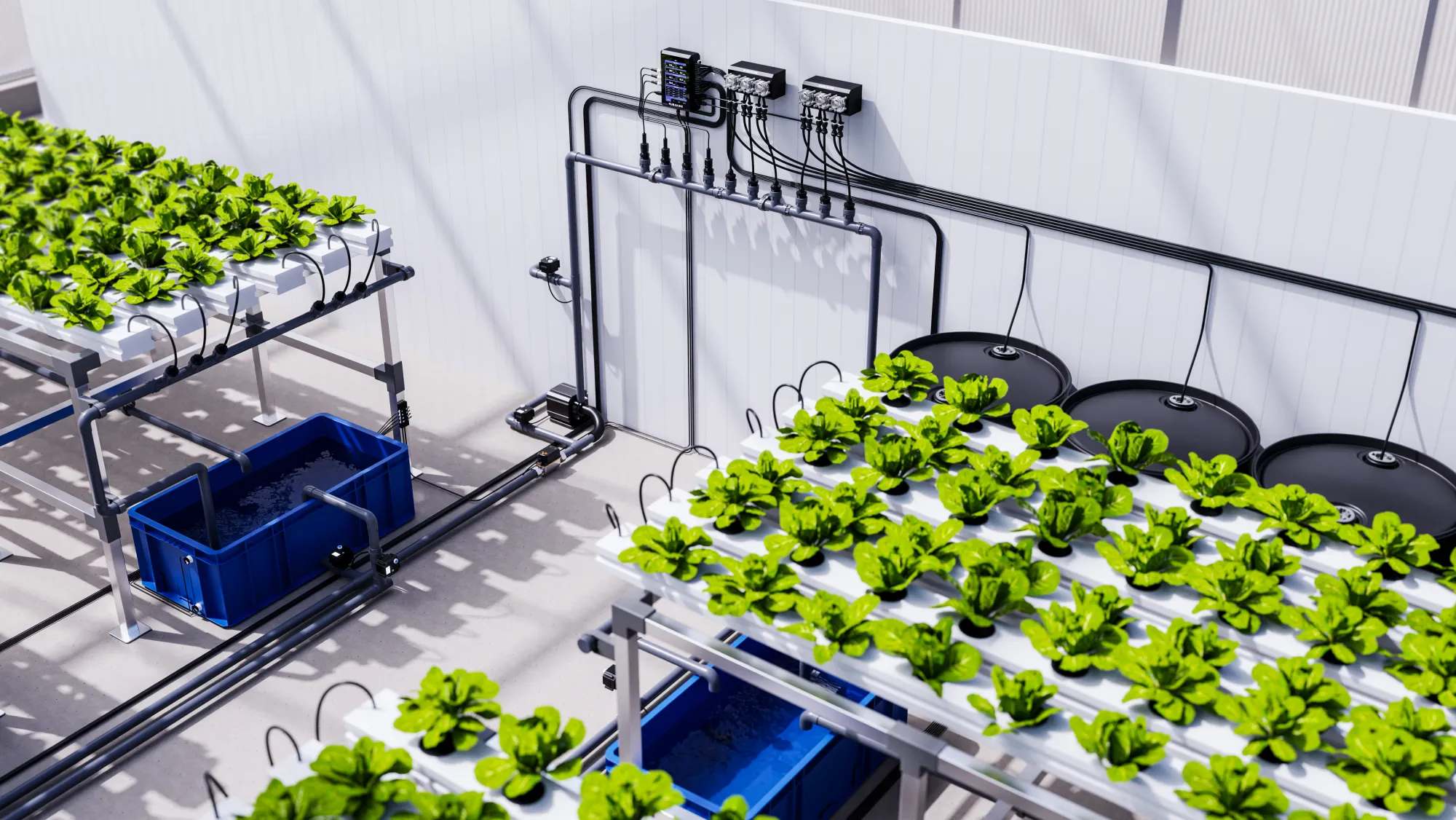
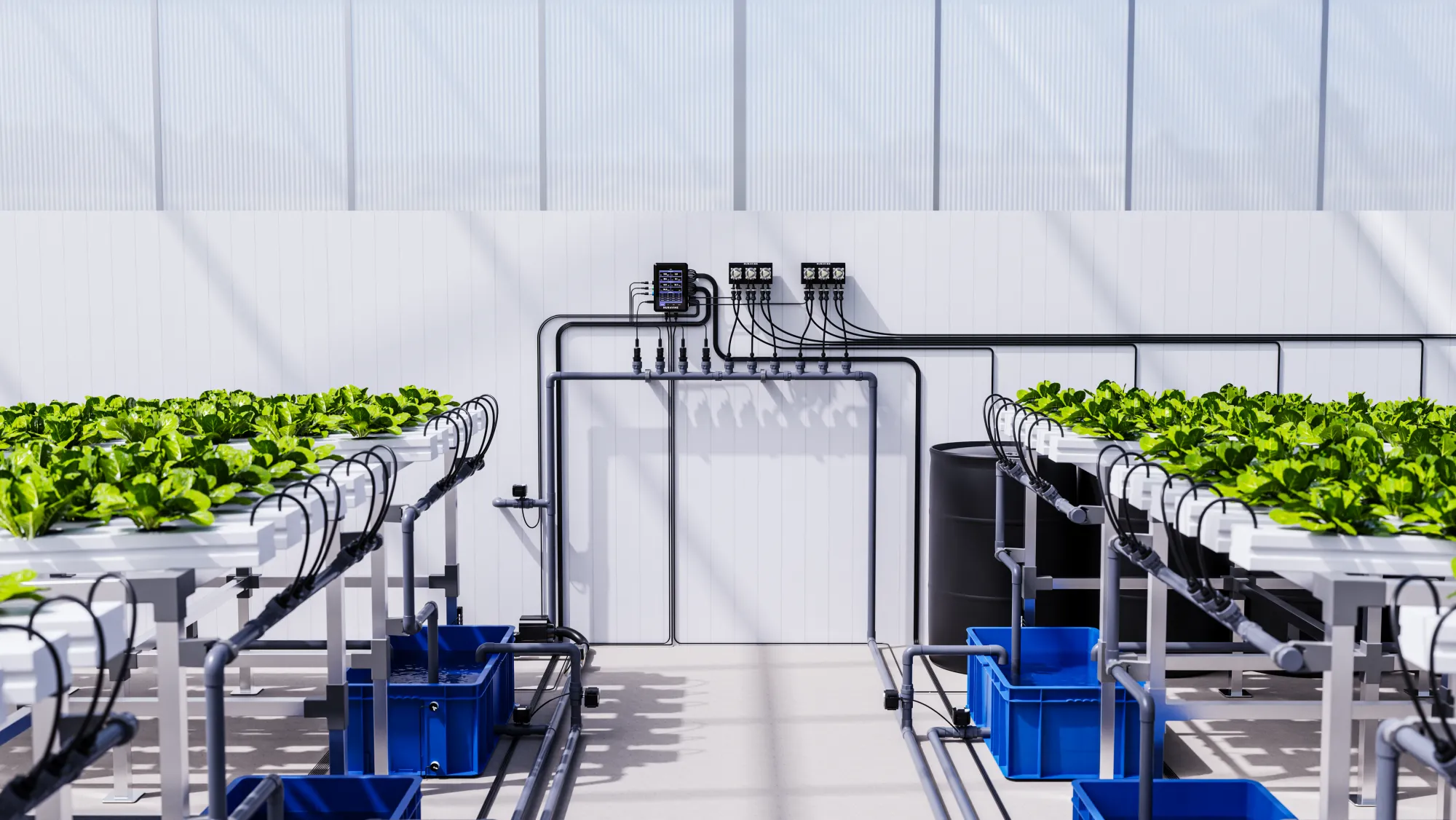
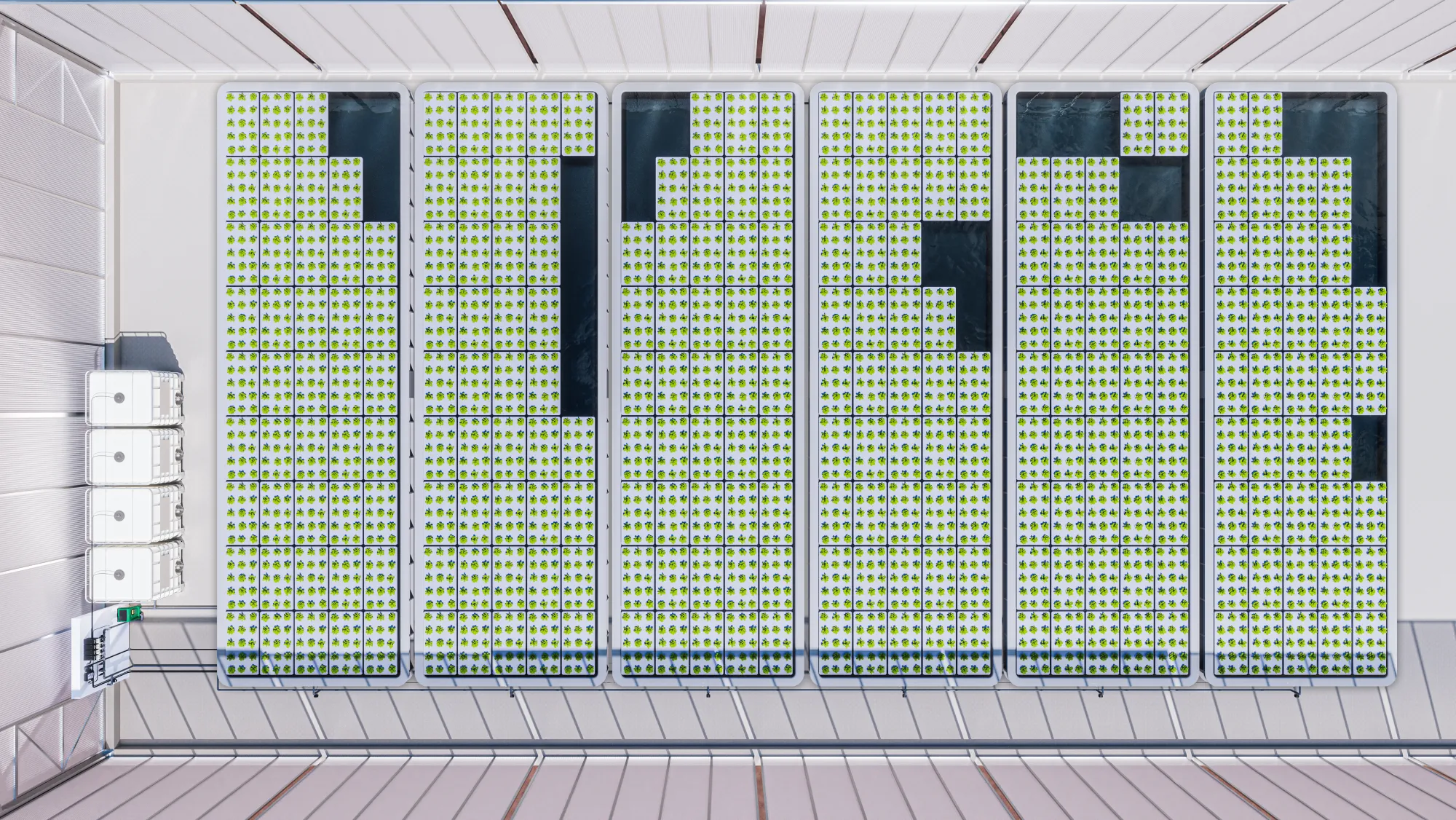
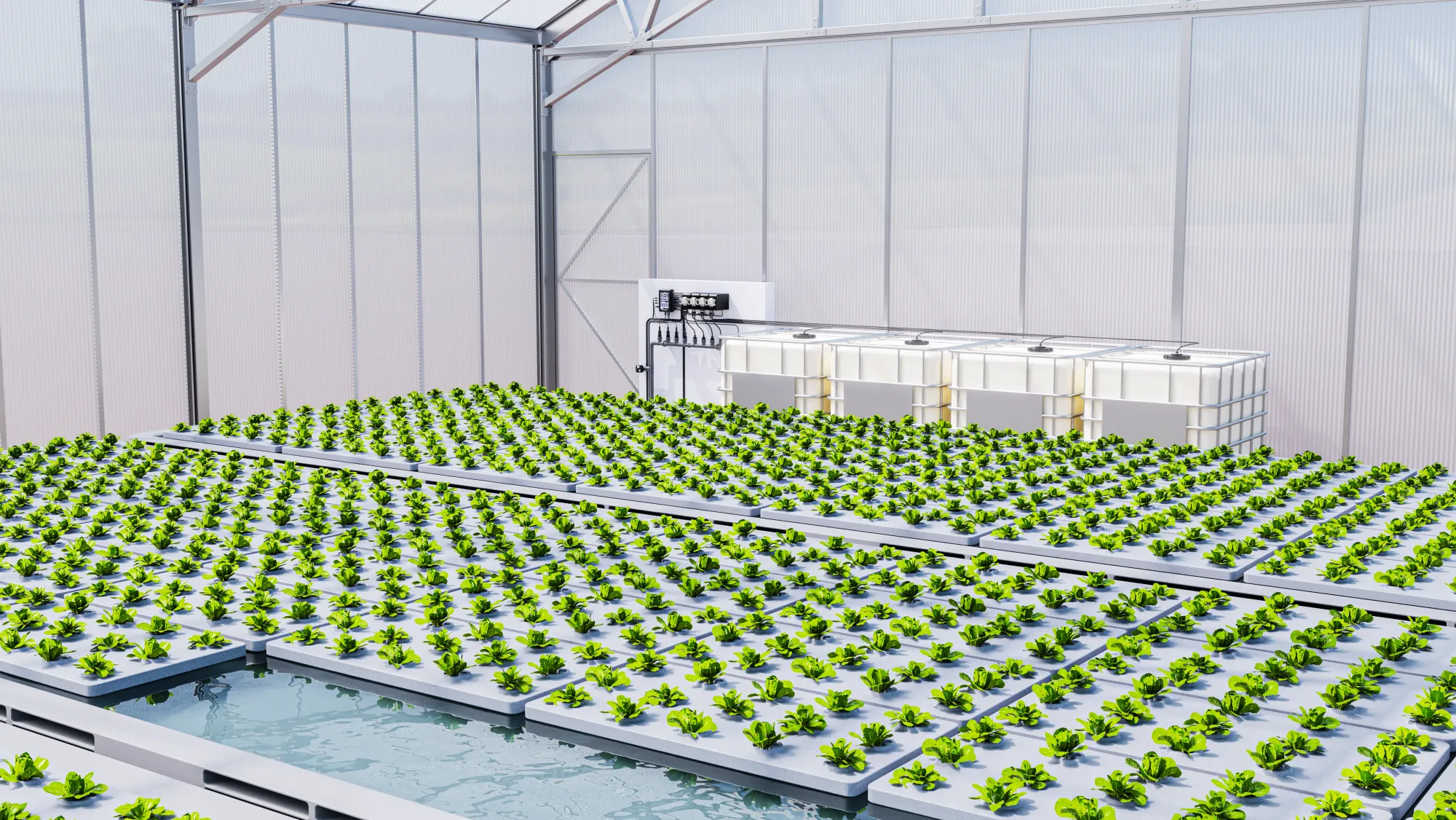
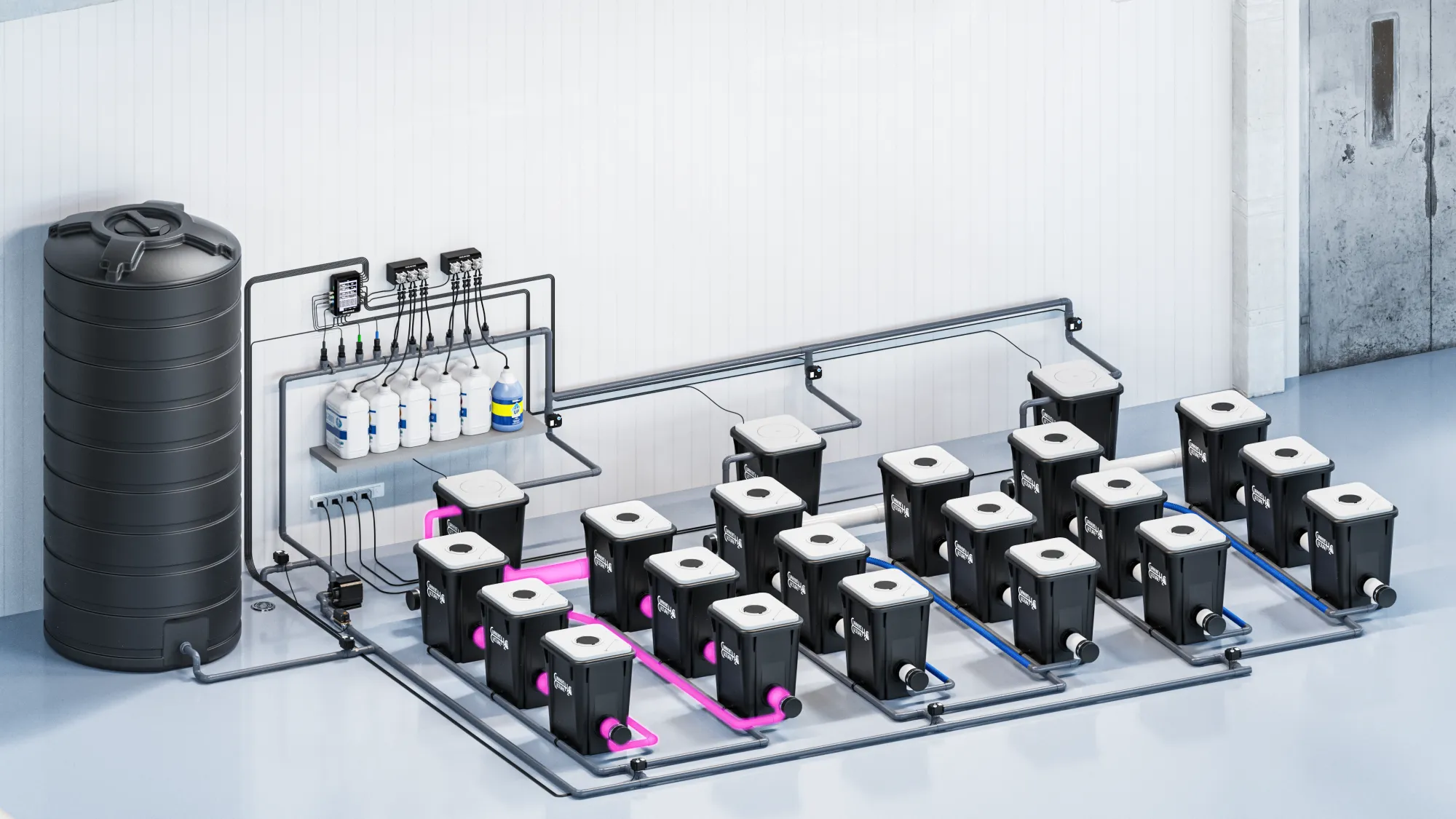
The most advanced dosing algorithm on Earth.
The industry default
// how a typical doser runs
Here's why you can trust it with your whole system. It starts with how everyone else does it.
Wait, then dump
- wait_until(EC < target)
- dump(entire_dose)
- check_later()
Typical dosers wait until pH or EC crosses a line. Then they dump a full dose of nutrients all at once, and check again later.
What that costs
> nutrients precipitate out of solution
> high EC zones shock plant roots
> levels turn uneven, plant to plant
Nutrients can precipitate out of solution. High EC zones shock plant roots. Levels turn uneven across the system, some plants get too much, others not enough.
Mixing time
+ mixing_time = measure_loop(system)
> one drop, all the way around
> say your system mixes in 45 minutes
Nuravine calculates your system's mixing time, exactly how long one drop of nutrients takes to travel all the way around. Say your system's mixing time is 45 minutes.
Divide the dose
+ dose = calculate(target)
+ chunks = divide(dose, 10)
> 45 minutes / 10 chunks = one chunk every 4.5 minutes
+ for chunk in chunks:
+   dose(part_A); wait_seconds()
+   dose(part_B); wait_seconds()
+   dose(part_C); wait_seconds()
> a chunk within a chunk, every part in every window
> parts never mix in concentrate
The dose splits into 10 chunks, one every 4.5 minutes. Inside each chunk, every nutrient part gets its own turn, part A, a pause, part B, a pause, part C. A chunk within a chunk, so no two nutrients ever mix in concentrate.
Timed to the water
+ // the full dose lands across one mixing_time
+ wait(mixing_time)
> let everything disperse before deciding again
+ measure(); decide()
The whole dosing sequence takes exactly one mixing time, so nutrients spread evenly as they land. Then the system waits another full mixing time before it even decides to dose again.
The result
+ assert even_distribution
> no high EC pockets, no root shock, every plant gets the same solution
Perfectly even distribution. No high EC pockets. No root shock. Every plant in the system gets the same solution.
Fill and dose from empty
+ while filling:
+   dose_alongside()
> even distribution, balanced EC in every section
> no need to premix a batch
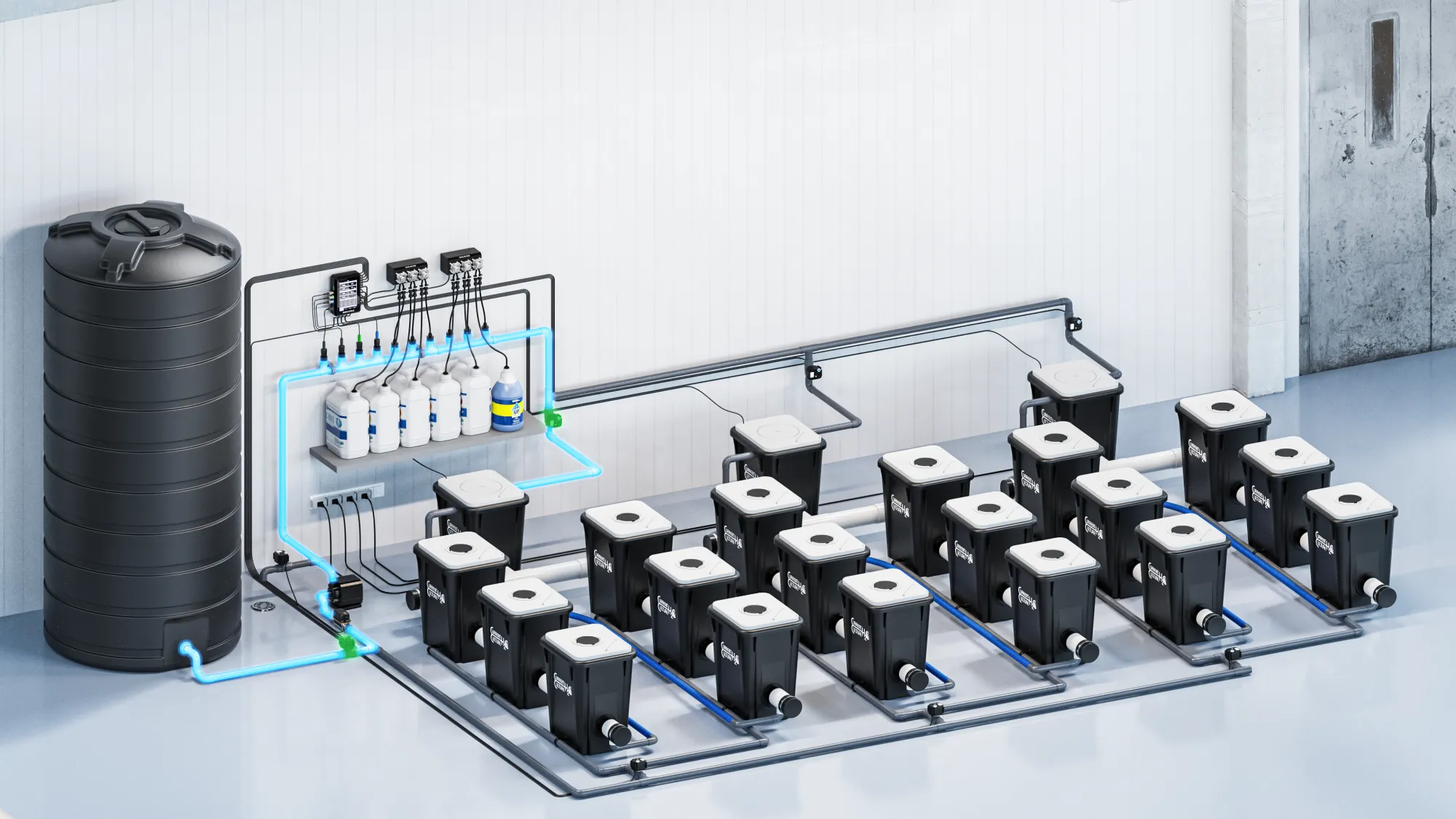
Because the system distributes nutrients evenly and holds a balanced EC in every section while the water flows, there's no need to premix a batch of nutrients before adding it. Dose straight into the fill, from empty.
Frequently asked questions
Is each system monitored?
Yes. One doser divides its monitoring across every system it runs through the day. With 8 systems connected, each gets roughly 3 hours. Readings land at sampling events, for example 12 AM, 8 AM, and 4 PM, which is also when dosing happens. Each event logs a starting EC and a final EC, giving you a clear picture of how the system ran all day.
What about multi-tier racks?
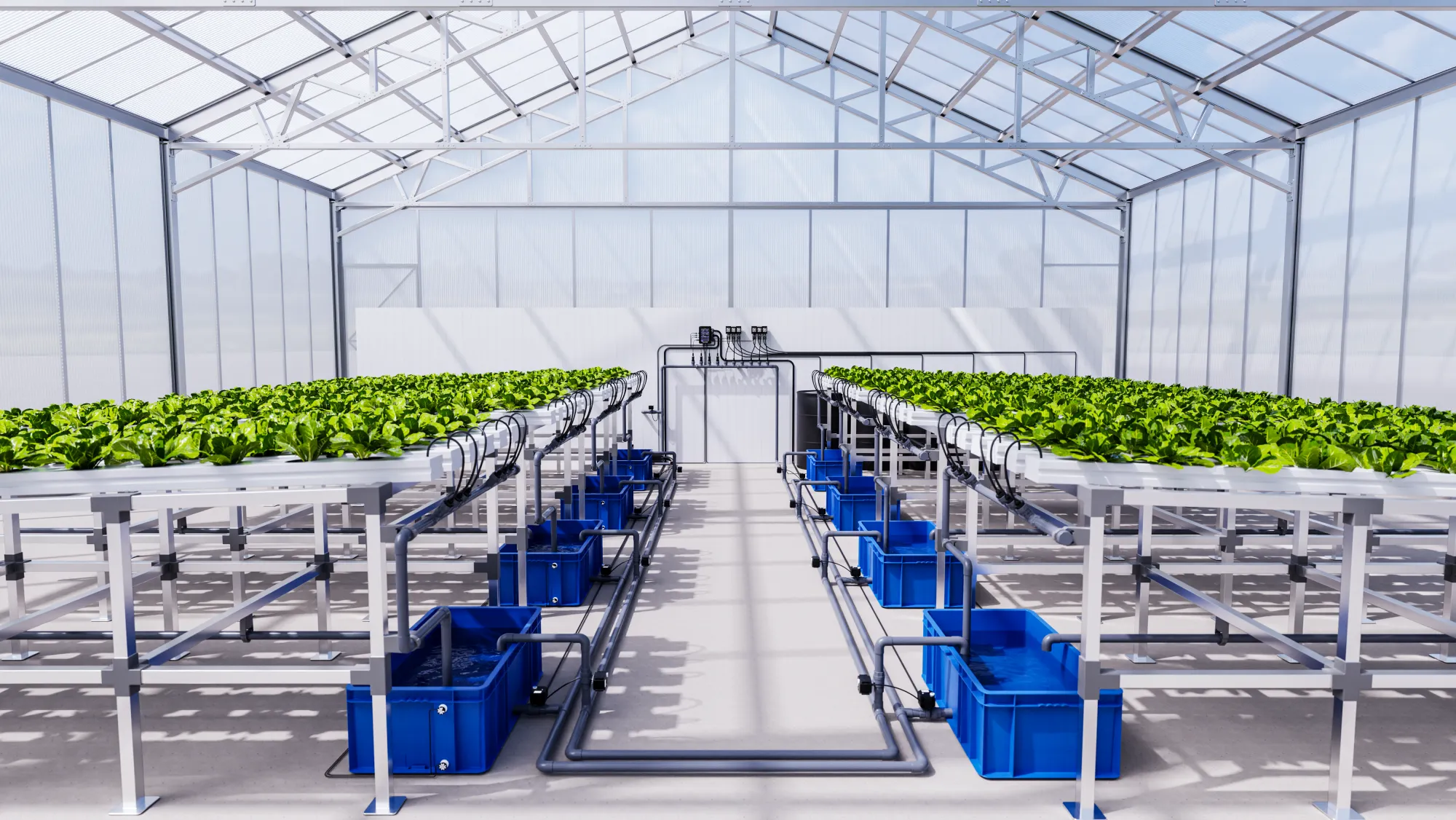
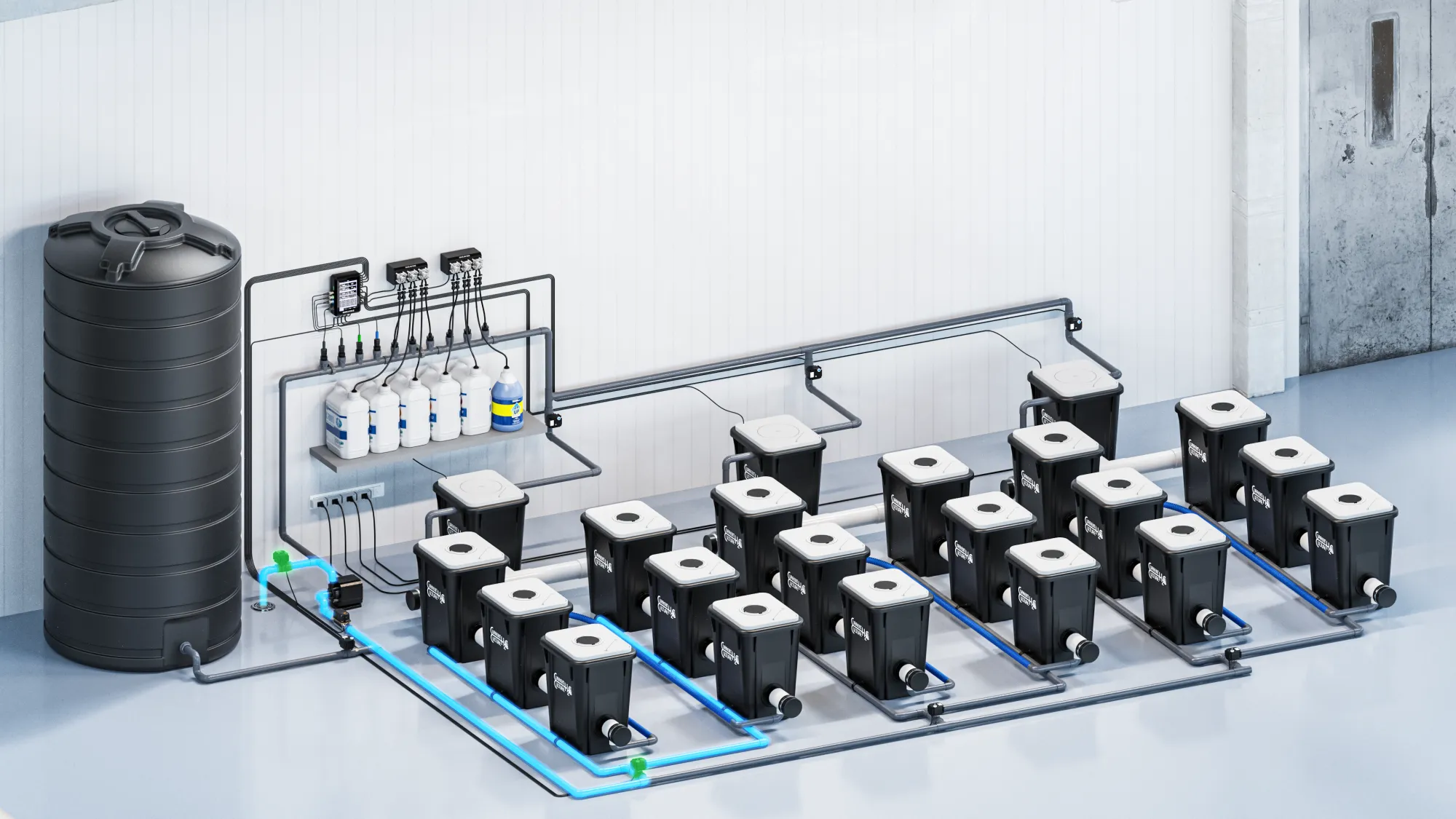
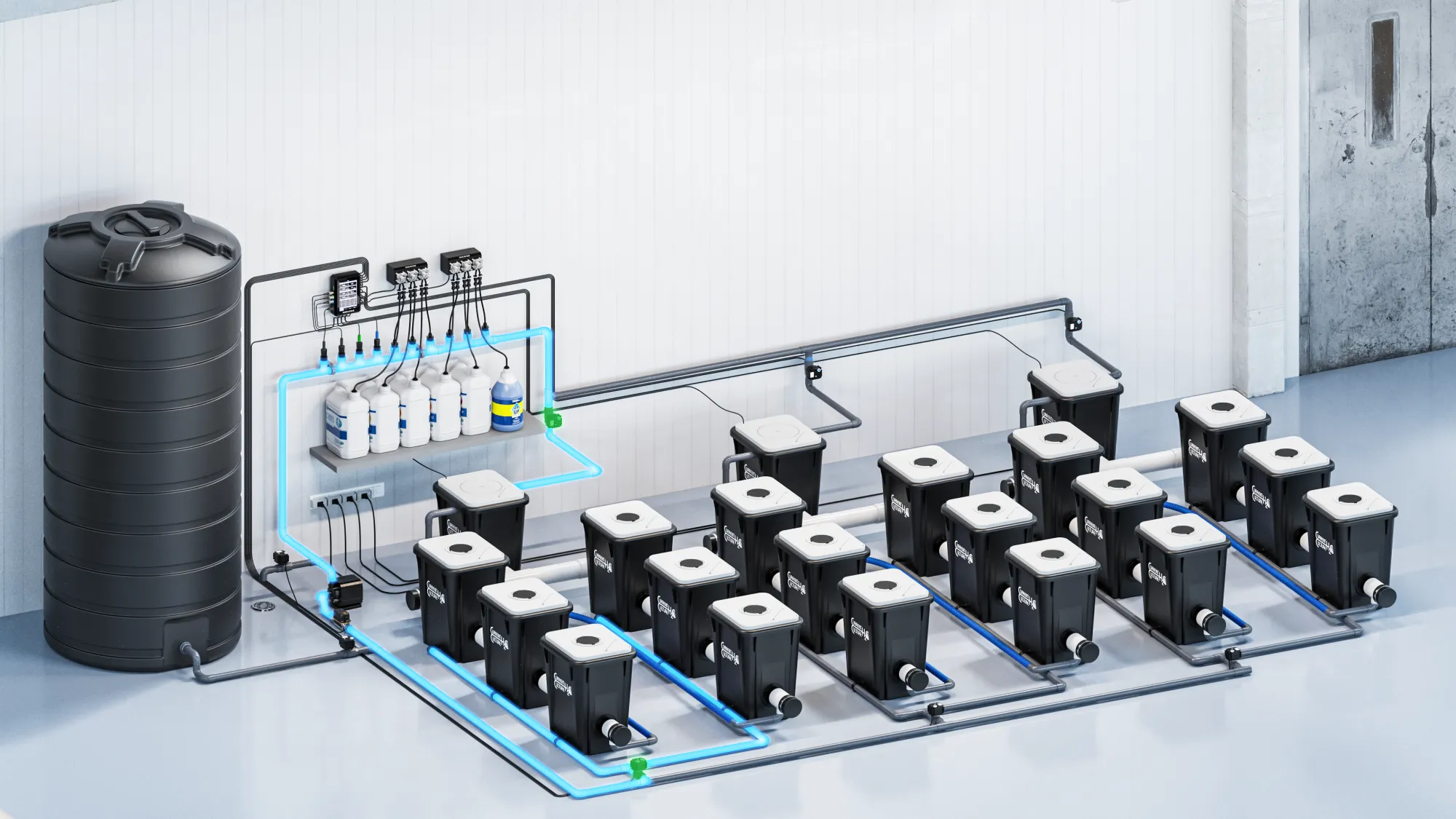
Multiple tiers are just multiple systems. The same multi-recirculating concept applies, with one doser cycling through each tier on its own schedule and its own recipe.
Is raw dosing into a DWC system safe?
Yes, it's a well-worn pattern. The dose lands in the central reservoir, not on the roots, can be metered slowly, and RDWC circulation disperses any spike quickly.
What if I don't have time to wait for the mixing time between doses?
For larger systems, Nuravine can dose on a cycle time instead. Say you set it to every four hours: at each cycle it checks EC and pH, and if either is out of range it does a single dose, calculated to land them on target and distributed evenly through the system, without waiting around to check again. The next check simply comes at the next cycle time, and if things are running a little low, the dose gets increased slightly, holding the exact average of nutrients and pH you're looking for.
Can I add a chiller?
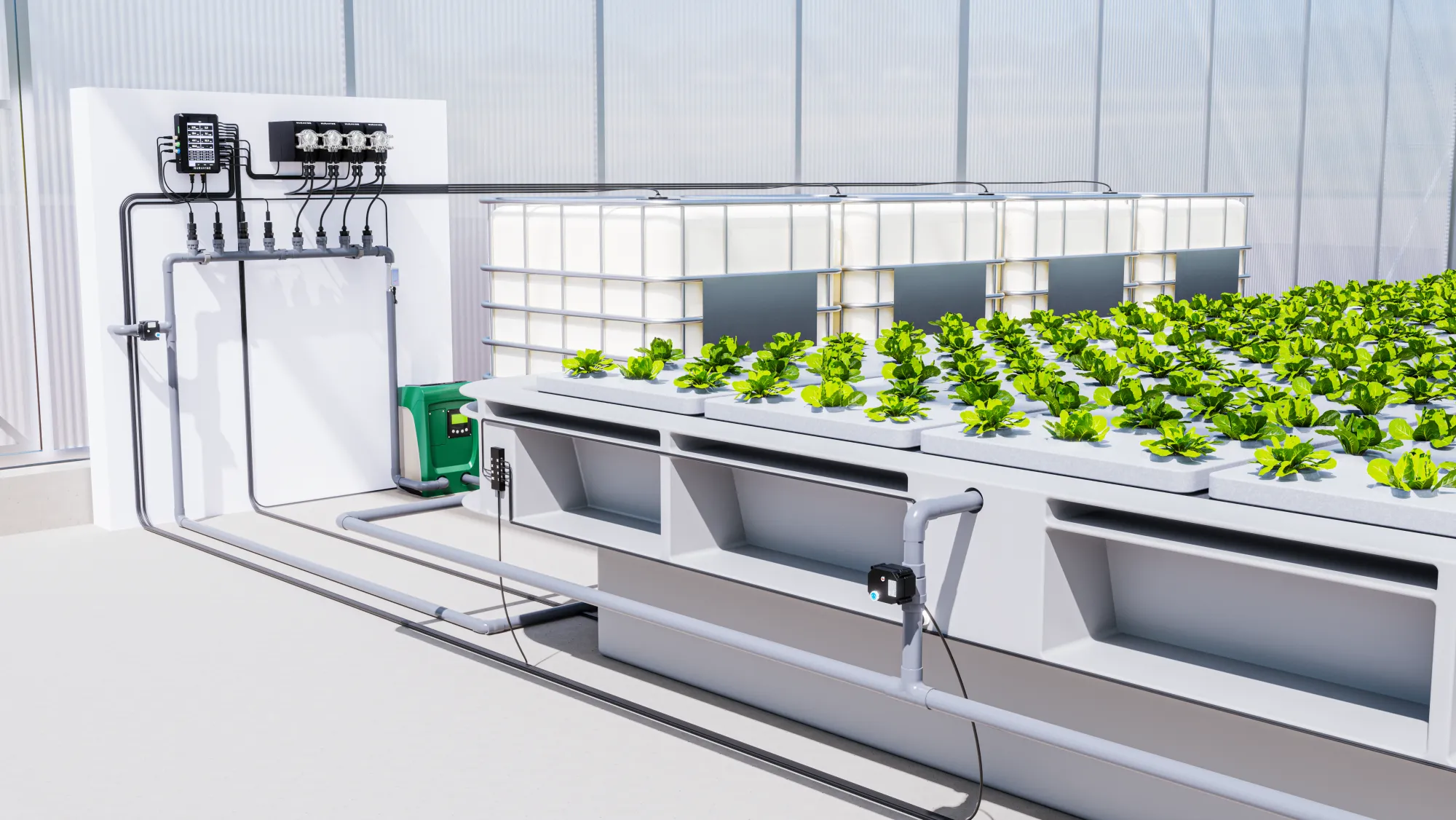
Yes, a chiller is a great idea. An inline chiller drops right into the Nuravine dosing loop, and if your chiller can be switched, the system turns it on and off to hold your target temperature. For larger systems, an isolated heat exchanger keeps the chiller water and the nutrient solution in separate loops, so salts never touch your chiller and temperatures stay tight and stable.
What are ORP and dissolved oxygen?
ORP, or oxidation reduction potential, is a measurement of the sterility of your water. For recirculating hydroponic systems, a level of 300 to 500 is typically recommended. Dissolved oxygen is the amount of oxygen held in your water, and in DWC it's what your roots breathe. Nuravine monitors both continuously, alongside EC and pH.
How does the system help prevent root disease?
Pythium and fusarium thrive when ORP drops, so the system watches it continuously and can inject hypochlorous acid intelligently to hold your target level, ahead of disease pressure, not after you spot it in the roots. On the oxygen side, well oxygenated water keeps roots healthy, and if you're after super oxygenated water, Nuravine can control an oxygen concentrator to inject oxygen directly into your DWC system.
Does it work for systems besides DWC and NFT?
Yes. Nuravine can manage and maintain any body of water, whether you're running aeroponics, ebb and flow, or tower systems. Whatever the system, Nuravine handles your dosing and automation needs.